
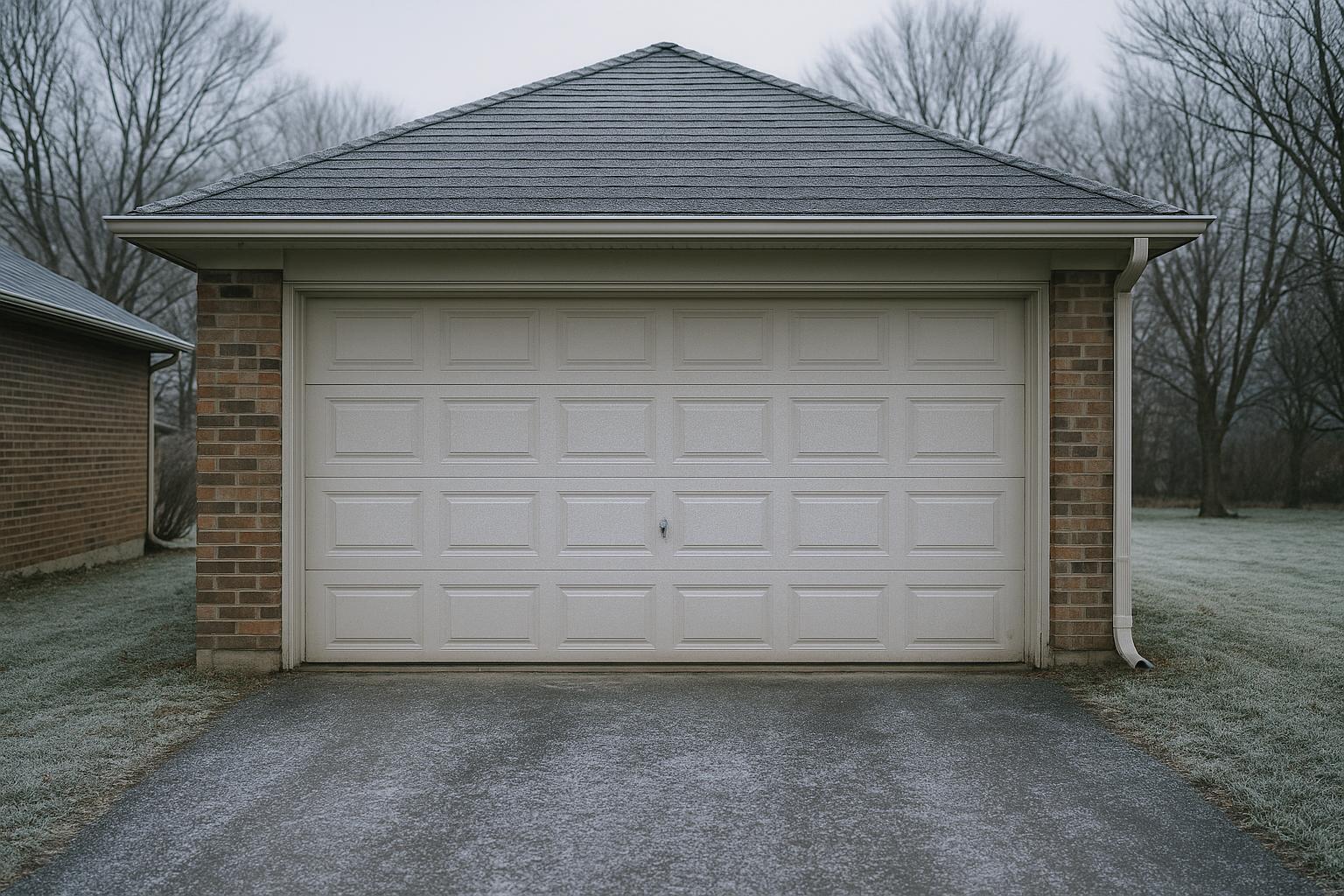
Winter Weather and Your Garage Door: A Common Clarksville Problem
Clarksville winters may not be as brutal as what you'd find further north, but temperatures regularly dip below freezing between December and February. And when they do, your garage door can start acting up in ways you might not expect. Maybe it won't open at all one morning. Maybe it opens halfway and stops. Or maybe the opener runs but the door doesn't budge.
If you've ever been stuck in your driveway on a freezing morning because your garage door refused to cooperate, you know how frustrating it can be. The good news is that most cold-weather garage door problems have straightforward causes and solutions. Let's walk through the most common issues and what you can do about them.
Why Cold Weather Affects Your Garage Door
Your garage door is a mechanical system with moving parts, lubricants, electrical components, and weatherstripping — all of which respond to temperature changes. Here's what happens when the mercury drops:
- Metal contracts: Steel tracks, springs, and hardware all contract slightly in cold temperatures, which can change how parts fit together and increase friction.
- Lubricant thickens: The grease on your springs, rollers, and hinges becomes thicker and less effective in the cold, making everything harder to move.
- Weatherstripping sticks: The rubber seal at the bottom of your door can freeze to the concrete floor, especially if there's moisture present.
- Opener struggles: Electric garage door openers have to work harder against increased resistance, and older units may not have enough power to overcome it.
The Door Is Frozen to the Ground
This is probably the most common cold-weather garage door complaint. When temperatures drop below freezing after rain, snow, or even heavy condensation, the rubber weatherstripping along the bottom of your door can literally freeze to the garage floor.
If this happens, do not keep hitting the opener button. Forcing the door open can tear the weatherstripping, damage the bottom panel, or burn out your opener motor.
Instead, try these steps:
- Use a heat gun or hair dryer along the bottom edge of the door to gently melt the ice.
- If you don't have a heat gun, pour warm (not boiling) water along the seal to loosen the bond.
- Once the ice starts to release, gently tap along the bottom of the door with a rubber mallet to break it free.
- After the door is open, clear away any standing water or ice from the floor where the seal meets the concrete.
To prevent this from happening again, you can apply a thin layer of silicone-based lubricant or cooking spray along the bottom seal before the next freeze. This creates a barrier that makes it much harder for ice to form a bond.
The Opener Runs but the Door Doesn't Move
If you hear your garage door opener motor running but the door stays put, the problem could be related to cold weather in a few ways. First, the increased friction from thickened lubricant and contracted metal may be creating more resistance than your opener can handle. Second, if your springs are already weakened or near the end of their lifespan, the added strain from cold temperatures might be enough to push them past their limit.
Check to see if the door moves when you disengage the opener and try to lift it manually. If it feels extremely heavy or won't budge, you likely have a spring issue that needs professional attention. If the door moves manually but the opener can't handle it, the opener may need adjustment or replacement.
The Door Opens Slowly or Only Partway
When a garage door opens sluggishly or stops partway up during cold weather, thickened lubricant is often the culprit. The rollers, hinges, and springs all need proper lubrication to function smoothly, and standard grease can turn almost solid in freezing temperatures.
The fix is simple: apply a silicone-based or lithium-based garage door lubricant to all moving parts. These formulas are designed to perform well across a wide range of temperatures. Spray the springs, rollers, hinges, and tracks, then open and close the door a few times to distribute the lubricant evenly.
Avoid using WD-40 as a long-term lubricant. While it's great for loosening stuck parts, it's primarily a solvent and doesn't provide lasting lubrication.
Tracks Are Misaligned or Obstructed
Metal contracts in cold weather, and if your garage door tracks were already slightly off, the contraction can make alignment problems worse. Look along the tracks for visible gaps between the rail and the rollers, or areas where the track appears bent or pinched.
You can also check for ice or debris that may have accumulated in the tracks. Leaves, dirt, and moisture can freeze inside the track channels and create blockages that prevent the rollers from moving freely. Wipe down the inside of the tracks with a clean cloth and remove any obstructions.
If the tracks themselves appear bent or significantly misaligned, that's a job best left to a professional. Attempting to bend tracks back into place without the right tools can make the problem worse and create a safety hazard.
Preventive Maintenance Makes a Big Difference
Most cold-weather garage door problems are preventable with a little preparation before winter sets in. Here's a quick checklist for Clarksville homeowners:
- Lubricate all moving parts with a cold-weather-rated garage door lubricant before the first freeze.
- Inspect your weatherstripping for cracks, tears, or gaps. Replace it if it's worn out — it's inexpensive and easy to install.
- Test the balance of your door by disconnecting the opener and lifting the door manually. It should stay open about three to four feet off the ground. If it falls, your springs may need adjustment.
- Clear the area around the bottom seal of any standing water or debris that could freeze overnight.
- Schedule a professional tune-up to have your springs, cables, rollers, and opener inspected before cold weather arrives.
When to Call a Professional
Some cold-weather issues are easy DIY fixes, but others require professional help. You should call a garage door technician if:
- Your door won't open even after troubleshooting the steps above.
- You notice a broken spring or frayed cable.
- The door feels extremely heavy when lifted manually.
- Your opener is making unusual sounds or smells like it's overheating.
- The tracks are visibly bent or damaged.
At Clarksville Overhead Door Co, we handle cold-weather garage door repairs throughout Clarksville, Fort Campbell, and the surrounding areas. Whether it's a frozen seal, a worn-out spring, or an opener that can't keep up, we'll diagnose the problem and get your door working again — usually the same day you call.
Don't Wait for the Next Freeze
If your garage door has been giving you trouble when temperatures drop, the issue is only going to get worse as winter continues. A quick maintenance visit now can save you from being stuck in your driveway on the coldest morning of the year. Give us a call or schedule a service appointment, and we'll make sure your garage door is ready for whatever Clarksville's winter throws at it.