
Your Garage Door Springs Are Doing More Work Than You Think
Every time you open or close your garage door, the springs are doing the heavy lifting — literally. A standard two-car garage door can weigh anywhere from 150 to 250 pounds, and without properly functioning springs, your opener alone can't handle that load. Springs counterbalance the weight of the door, making it possible to raise and lower it smoothly dozens of times a week.
But like any mechanical component under constant stress, garage door springs wear out over time. For homeowners in Clarksville, where we use our garages year-round through hot summers and cold winters, understanding the lifespan of your springs can save you from an unexpected — and potentially dangerous — failure.
How Long Do Garage Door Springs Typically Last?
Most standard garage door springs are rated for approximately 10,000 cycles. One cycle equals one full open and one full close. If your household opens and closes the garage door four times a day, that works out to roughly seven to nine years of use before the springs reach the end of their expected lifespan.
However, several factors can shorten or extend that timeline:
- Frequency of use: Families with multiple drivers or those who use the garage as a primary entrance may cycle the door six to eight times daily, cutting the spring life down to five or six years.
- Climate and humidity: Tennessee's humid summers can accelerate rust and corrosion on uncoated springs, weakening them faster.
- Maintenance habits: Springs that are regularly lubricated and inspected tend to last longer than those that are neglected.
- Spring quality: Not all springs are created equal. Higher-cycle springs (rated for 25,000 or even 50,000 cycles) are available and can last significantly longer, though they cost more upfront.
Signs Your Garage Door Springs Are Wearing Out
Springs rarely fail without warning. If you know what to look for, you can usually spot the signs of wear before a complete break occurs. Here's what to watch for:
The Door Feels Heavier Than Usual
Try disconnecting your opener by pulling the emergency release cord, then manually lift the door halfway. A properly balanced door should stay in place on its own. If it feels unusually heavy or slides back down, your springs are likely losing tension.
Visible Gaps in the Spring Coils
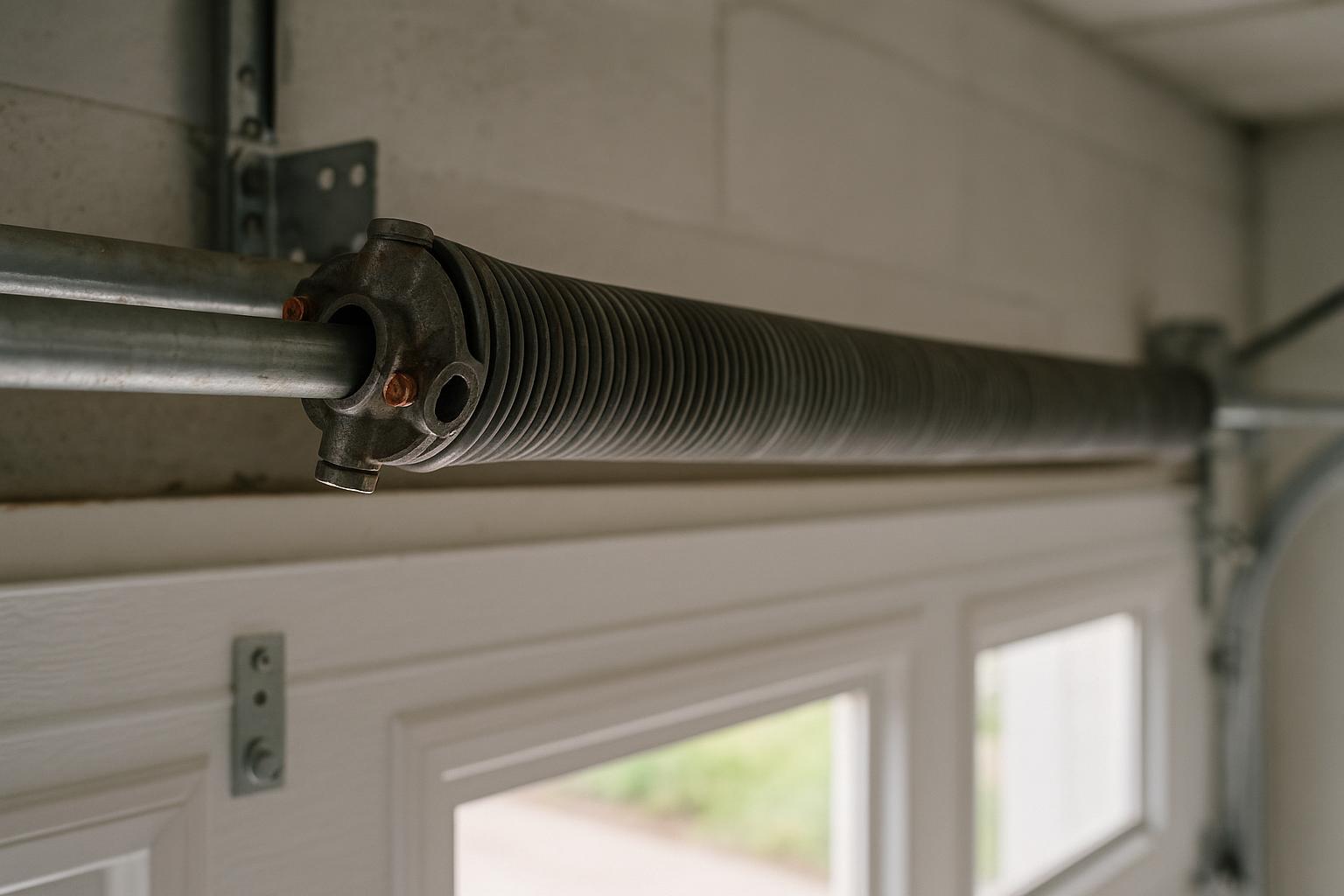
Take a look at the torsion spring mounted above your garage door. When a spring is in good condition, the coils are tightly wound together. If you notice a visible gap or separation between the coils, the spring has already broken or is close to failing.
The Door Opens Unevenly or Jerks
If your garage door rises crookedly or hesitates and jerks during operation, one of your extension springs (if you have a two-spring system) may be weaker than the other. This imbalance puts extra strain on the opener and the remaining spring.
Loud Bang From the Garage
Many homeowners in Clarksville have told us they heard a loud bang from the garage — almost like a gunshot — only to find that a spring had snapped. If this happens, do not attempt to operate the door. A broken spring under tension is extremely dangerous.
The Opener Struggles or Stops Working
When springs lose their ability to counterbalance the door's weight, the opener has to work much harder. You might notice it straining, running louder than normal, or stopping mid-cycle. Continuing to run the opener in this condition can burn out the motor.
Can You Replace Garage Door Springs Yourself?
We understand the DIY spirit — it's strong here in Clarksville and the surrounding communities near Fort Campbell. But garage door spring replacement is one job we strongly recommend leaving to a professional. Here's why:
- Torsion springs are under extreme tension. A standard torsion spring stores enough energy to cause serious injury or death if it unwinds uncontrollably during removal or installation.
- Specialized tools are required. Proper spring replacement requires winding bars, a precise understanding of spring sizing, and experience with the hardware. Using the wrong tools — like screwdrivers or pliers instead of winding bars — is one of the most common causes of DIY spring injuries.
- Incorrect spring sizing causes problems. If you install a spring with the wrong wire gauge, length, or inside diameter, the door won't balance correctly, and you'll be right back where you started — or worse.
A trained technician can typically complete a spring replacement in under an hour, and the peace of mind is worth every penny.
Should You Replace One Spring or Both?
If your garage door uses a two-spring system and one spring breaks, we almost always recommend replacing both springs at the same time. The reasoning is simple: both springs were installed at the same time, have the same number of cycles on them, and have experienced the same wear. If one has failed, the other is likely close behind.
Replacing both springs together also ensures the door stays properly balanced, which protects your opener and extends the life of the entire system. It's also more cost-effective than paying for two separate service calls a few months apart.
How to Make Your Springs Last Longer
You can't prevent springs from eventually wearing out, but you can slow down the process with some basic maintenance:
- Lubricate your springs every six months. Use a silicone-based or white lithium garage door lubricant. Spray along the length of each spring to reduce friction and prevent rust. Avoid WD-40 — it's a solvent, not a long-term lubricant.
- Schedule an annual tune-up. A professional maintenance visit includes spring inspection, balance testing, hardware tightening, and lubrication of all moving parts. It's the single best thing you can do to extend the life of your garage door system.
- Consider high-cycle springs. If you're replacing springs anyway, ask about upgrading to high-cycle options. They cost a bit more but can last two to three times longer than standard springs.
- Don't ignore small problems. A door that's slightly off-balance or making new noises is telling you something. Addressing minor issues early prevents them from turning into major repairs.
When It's Time, We're Here to Help
At Clarksville Overhead Door Co, we handle spring replacements throughout Clarksville, Fort Campbell, Oak Grove, Springfield, Ashland City, and Hopkinsville. We stock the most common spring sizes on our trucks so most repairs can be completed in a single visit. We show up when we say we will, give you an honest assessment, and get your door working safely again.
If your garage door springs are showing signs of wear — or if one has already snapped — don't wait and don't try to force the door open. Give us a call and let us take care of it the right way.