
What to Expect When You Schedule a Garage Door Installation
If you're planning to replace your garage door, one of the first questions on your mind is probably: how long is this going to take? Whether you're upgrading your home's curb appeal, replacing a door that's seen better days, or finishing a new construction project in Clarksville, knowing the timeline helps you plan your day and set realistic expectations.
The good news is that most residential garage door installations are faster than people think. But the actual time depends on several factors, from the type of door you're getting to the condition of your existing setup. Let's break it all down.
The Short Answer: 3 to 6 Hours for Most Installations
A standard single garage door installation typically takes about 3 to 4 hours when performed by experienced technicians. A double-wide garage door usually takes 4 to 6 hours. These timeframes assume a straightforward replacement where the existing tracks, framing, and opening are in good condition.
If you're having a new opener installed at the same time — which many homeowners opt for — add another 1 to 2 hours to the total. So in most cases, you're looking at a half-day project from start to finish.
Factors That Can Affect Installation Time
Not every installation is the same. Here are the most common variables that can speed things up or slow things down.
1. Removing the Old Door
Before a new door goes up, the old one has to come down. If your current door is a standard sectional door in decent shape, removal is quick — usually under an hour. But if the old door is damaged, rusted, or has a non-standard setup, it can take a bit longer to safely disassemble and haul away.
2. Condition of the Opening and Framing
Once the old door is removed, technicians inspect the framing, header, and tracks. If the wood framing around the opening is rotted, warped, or structurally compromised, it needs to be repaired before the new door can be installed. This is common in older homes around the Clarksville area, especially those that have been exposed to years of humidity and weather. Framing repairs can add 1 to 3 hours depending on the extent of the damage.
3. Type of Garage Door
The style and material of your new door play a role in installation time. A basic steel raised-panel door is the fastest to install. Doors with windows, insulation, or carriage-house designs require more assembly and alignment, which adds time. Custom wood doors or doors with unique hardware can take even longer.
4. New Tracks and Hardware
Sometimes the existing tracks and hardware can be reused, but in many cases, a new door comes with its own track system that needs to be installed from scratch. This is especially true if you're changing the door size, style, or manufacturer. New tracks ensure proper fit and smooth operation, but they do add to the installation time.
5. Opener Replacement or Addition
If you're adding a new garage door opener or replacing an outdated one, your installer will need to mount the unit, install the rail, wire the controls, and program your remotes. Modern openers with Wi-Fi connectivity and battery backup systems may require a few extra steps for setup and testing.
6. Converting a Single Door to a Double (or Vice Versa)
Changing the size of your garage opening is a bigger project that involves structural modifications. This type of work goes beyond a standard installation and can take a full day or more. It may also require permits depending on local building codes in Montgomery County.
What Happens During the Installation Process
Understanding the steps involved can help you know what to expect on installation day.
- Removal of the old door: The existing door, springs, tracks, and hardware are carefully taken down and removed from the garage.
- Inspection of the opening: The technician checks the framing, header, floor, and side jambs to make sure everything is square, level, and structurally sound.
- Installation of new tracks: Vertical and horizontal tracks are mounted and leveled to ensure the new door operates smoothly.
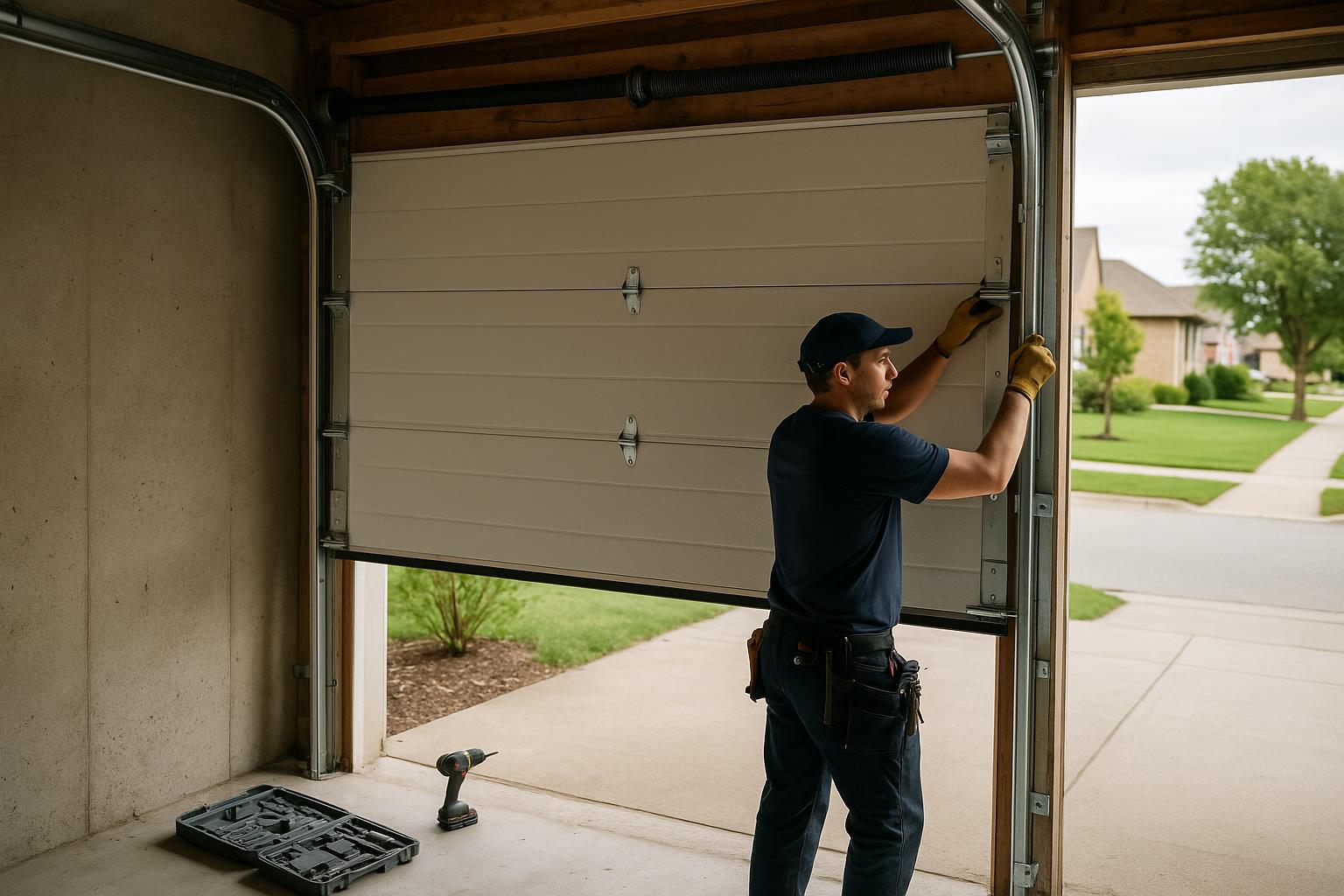
- Assembly and hanging of the new door: Door sections are assembled one at a time from the bottom up, with hinges, rollers, and struts attached as the door goes together.
- Spring installation and tensioning: Torsion or extension springs are installed and carefully adjusted to balance the door's weight. This is one of the most critical — and dangerous — parts of the process.
- Opener installation (if applicable): The motor unit, rail, and trolley are mounted and connected. Safety sensors are installed and aligned near the floor.
- Testing and adjustments: The door is cycled multiple times to check balance, alignment, seal, and safety features. The technician makes final adjustments to spring tension, travel limits, and force settings.
Can You Use Your Garage During Installation?
Plan on your garage being out of commission for the duration of the installation. You won't be able to park inside or access the garage through the door while work is underway. If you have items you'll need during the day, move them out beforehand. Most homeowners in Clarksville find it easiest to schedule the installation on a day when vehicles can stay in the driveway.
Should You Try to Install a Garage Door Yourself?
We understand the appeal of a DIY project, but garage door installation is one job that's best left to professionals. The springs alone are under extreme tension and can cause serious injury if handled incorrectly. Beyond safety, improper installation can lead to premature wear, voided warranties, and a door that doesn't seal or operate correctly.
A professional installation also ensures that everything meets manufacturer specifications, which is important for maintaining your warranty coverage.
How to Prepare for Installation Day
A little preparation goes a long way toward keeping the installation on schedule:
- Clear the garage — Move vehicles, storage bins, tools, and anything else away from the door area. Technicians need clear access to the opening and ceiling.
- Ensure power is available — The opener and tools require electricity, so make sure the outlet in your garage is accessible and working.
- Secure pets — An open garage and power tools aren't a great mix with curious dogs or cats. Keep them inside or in another area of the house.
- Be available for questions — Your installer may need to confirm details about opener features, remote programming, or keypad placement.
Ready for a New Garage Door?
If you've been thinking about replacing your garage door, the process is more straightforward than most people expect. At Clarksville Overhead Door Co, we handle every step — from helping you choose the right door to completing a clean, professional installation. We serve homeowners throughout Clarksville, Fort Campbell, Oak Grove, and the surrounding communities, and we show up when we say we will.
Give us a call to schedule a free estimate and find out how easy it is to upgrade your garage door.